
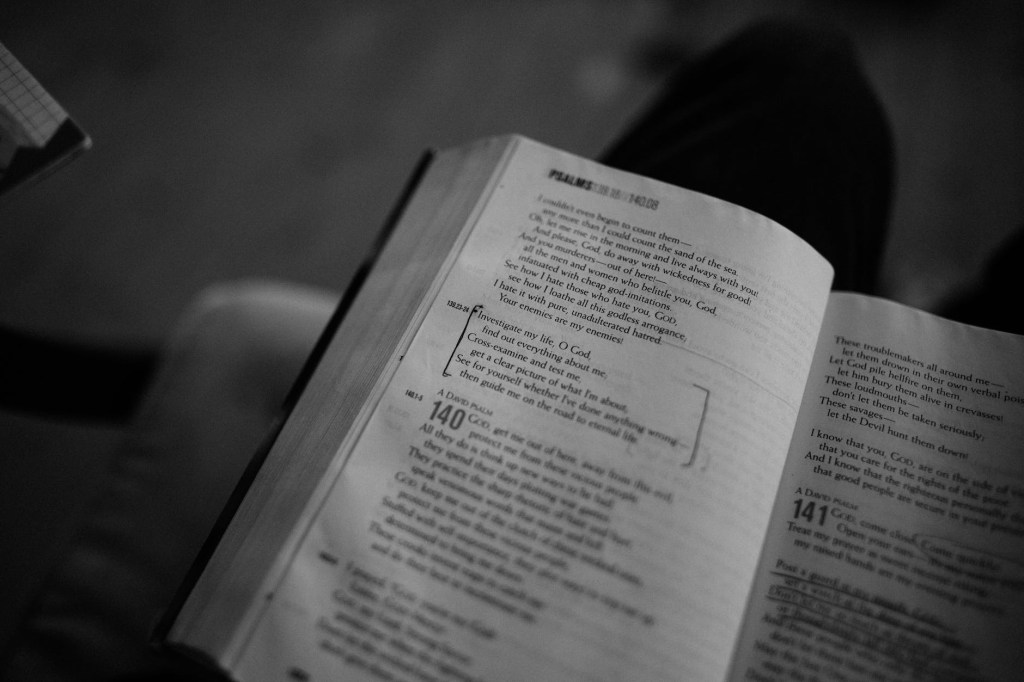
Psalm 109 is a psalm of David, and it is one of the imprecatory psalms, meaning it contains curses or prayers for the punishment of the psalmist’s enemies.
1-5: Plea for Justice
David calls upon God for justice, lamenting that he is surrounded by deceitful and wicked enemies who repay his kindness with evil and hatred.
6-20: Prayers Against the Wicked
He prays for a series of curses to befall his adversaries, asking that they experience misfortune, poverty, and a short life.
21-31: Personal Lament and Prayer for Deliverance
Despite the severe imprecations, David turns his attention back to his own suffering, expressing his frailty and pleading with God for salvation. He expresses trust that God will stand beside him and save him from his enemies.
Life Applications:
- Seeking Justice (v. 1-5)
Life Application: It is natural to desire justice when wronged. We can bring our grievances to God, trusting that He is a just judge. - Handling Anger and Bitterness (v. 6-20)
Life Application: While expressing anger and asking God for justice is a biblical response, we must also be cautious not to let bitterness take root in our hearts. New Testament teachings emphasize loving our enemies and leaving vengeance to God (Romans 12:19). - Trust in God’s Deliverance (v. 21-31)
Life Application: In times of distress and persecution, we can trust God for deliverance. Our response should be one of faith, prayer, and praise, recognizing God’s sovereignty and goodness. - Cultivating a Heart of Praise (v. 30-31)
Life Application: Regardless of our circumstances, we should always have a heart ready to praise God. David concludes the psalm with praise, showing his trust in God’s righteous judgment and deliverance.
Psalm 109 teaches us about the raw human emotion in times of distress and the importance of bringing our hurts and desires for justice before God. It also reminds us to maintain a heart of trust and praise in all circumstances.
 One Man’s Journey