
In Luke 13, Jesus talks to a bunch of people about changing their ways and seeking forgiveness (verses 1-5). He shares a story about a fig tree that hasn’t produced any fruit, but it gets another chance to grow (verses 6-9). Jesus then heals a woman who couldn’t walk for 18 years, and he uses this to teach about the importance of healing and rest on the Sabbath (verses 10-17).
Later, he tells two short stories about a mustard seed and yeast, showing that the Kingdom of God starts small but grows big over time (verses 18-21). Jesus also talks about going to Jerusalem despite knowing that trouble awaits him there (verses 22-35). He wishes he could protect the people of Jerusalem, just like a mother hen protects her chicks.
Some Pharisees warn Jesus about Herod wanting to harm him, but Jesus doesn’t get scared (verses 31-33). He expresses sadness over Jerusalem because the people there missed their chance for salvation (verses 34-35).
In a nutshell, Luke 13 is all about Jesus teaching, healing, and sharing stories to show that change is possible, God’s Kingdom is growing, and he’s determined to keep going despite the challenges he faces.
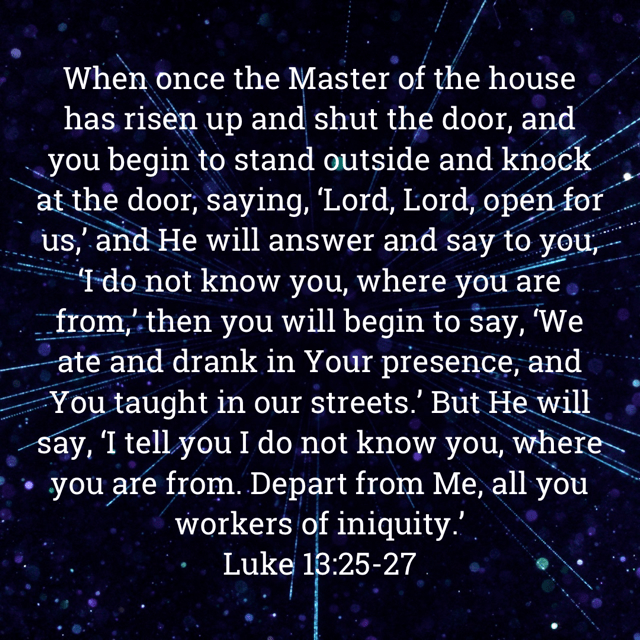
Luke 13 (verses 23-30), really stuck out to me. Jesus reminds us that He’s here to guide our hearts, not just satisfy our curiosity. Instead of asking, “How many will be saved?” we should ask ourselves, “Will I be one of them?”
He tells us to focus on ourselves and our actions, not worry about what will happen to others. We need to strive to enter through the narrow gate, which means making a real change in our lives.
These words are for all of us; we each need to put in the effort. Salvation requires a transformation of our whole being. So, let’s wake up and take this seriously. The answer to the question, “Will only a few be saved?” is not as important as what we do with our own lives.
Don’t lose hope, though. In heaven, we’ll be surprised to meet many unexpected faces and miss some we thought would be there. The key is to focus on our personal journey and seek salvation earnestly.
 One Man’s Journey